
Can You Mix Wood Tones in Your Home? Here's How to Do It Right
Can You Mix Wood Tones in Your Home? Here's How to Do It Right
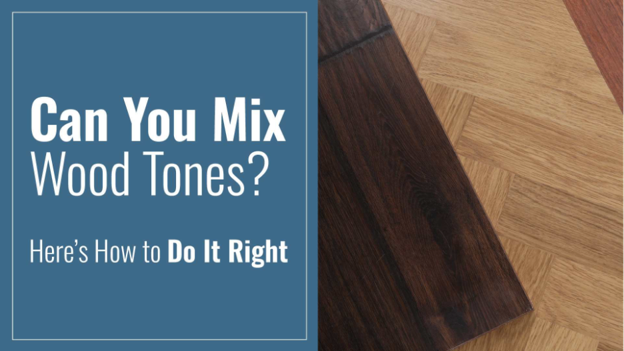
There's a mythical rule that floats around flooring decisions: pick one type of wood and keep it throughout the house. But thoughtfully designed homes often mix several woods. A floor color that shifts from room to room, pale to deep and back, reads as layered rather than mismatched, provided the tones were chosen to relate. Done with intention, a mix of wood floors looks like the work of someone with an eye for design.
And you can be that someone. Behind that mythical rule is actually a small set of relationships between the color tones. These relationships are what designers rely on to make the choices that make homes feel polished. You might be flooring your whole home at once or tackling one room at a time. But either way, you can bring this skill home. This blog discusses what you need to know to mix wood tones with confidence.
The Warm-on-Warm Room That Never Looks Matchy
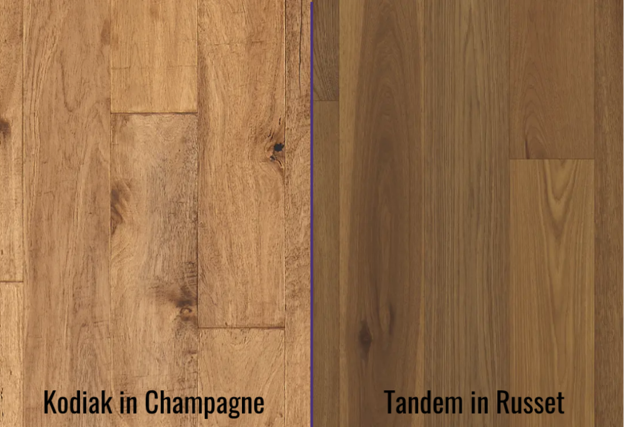
The first rule is the one that makes all the others work: two floors belong together when they share a temperature, not a color. Temperature is the warmth or coolness underneath the color, and it's what decides whether two woods go together. Three brown floors can each look distinct and still read as a family, as long as the three colors share the same kind of warmth.
That underlying temperature is called the undertone, and every wood tone carries one of three main types:
- A warm undertone shows up as yellow, gold, honey, amber, or red.
- A cool one leans gray, ash, or blue-gray.
- A neutral one, the taupes and greiges and a true white oak, sits near the middle.
Once you can place a floor in one of those three color families, the combinations show themselves. Match the temperature, then, and you can let the color, darkness, and grain vary as much as you like. Warm colors are trending in 2026, so warm-on-warm is the pairing you might be seeing the most.
Pictured: Mannington's Kodiak in Champagne and Tandem in Russet.
Give Your Home One Color That Leads
Undertone tells you which floors can share a home. It doesn't tell you how many to run at once, and that's a separate call. A house can hold three or four floors that each pass the temperature test and still feel restless, because sharing a temperature isn't the same as sharing a purpose. When every floor pulls for attention equally, none of them leads.
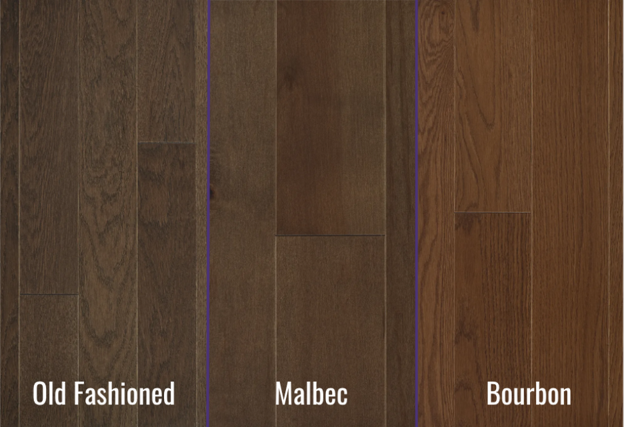
The fix is a clear hierarchy: one floor leads, and one or two support it from elsewhere in the house. Old Fashioned, Malbec, and Bourbon all sit in the same warm brown family, so any of the three would agree with each other. But a real home wouldn't run all three in equally visible rooms. Bourbon might lead in the living room, the space you're in the most, while Malbec and Old Fashioned support it in a bedroom or hallway, rooms you pass through rather than live in. The lead isn't the boldest or most expensive floor. It's simply the one in the room where you spend the most time. Give that room the lead, and the other two can support it from elsewhere in the house instead of competing with it.
Pictured: Old Fashioned, Malbec, and Bourbon from Superior.
One Sightline, Two Wood Tones, Still Intentional
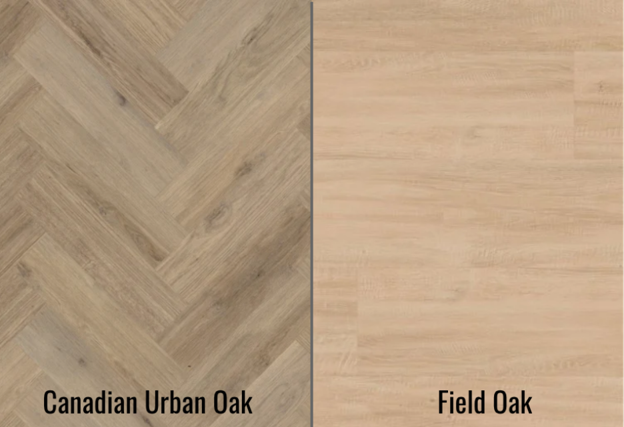
An open floor plan raises the stakes. Behind a wall, two floors never meet the eye at once, so a small mismatch goes unnoticed. Open the space up, and you see both floors in a single glance, where they have to work as a pair. You have two ways to handle it. Run one floor straight through and the space reads as a single room. Or change floors on purpose to mark one zone from another. That only works when the change lands where the eye expects a break, at a doorway, a threshold, or the opening into a great room. A floor that changes in the open middle of a room reads as a floor that ran short.
The trick that makes a deliberate change unmistakable is to change more than the color. Turn the plank direction where the floors meet, or step from straight boards into a herringbone at the line. A pale floor laid straight in one room and a warmer floor set on the diagonal in the next reads as a choice, not an accident.
Pictured: Karndean's Field Oak and Canadian Urban Oak.
A Wood Floor That Holds Its Own Against Wood Cabinets
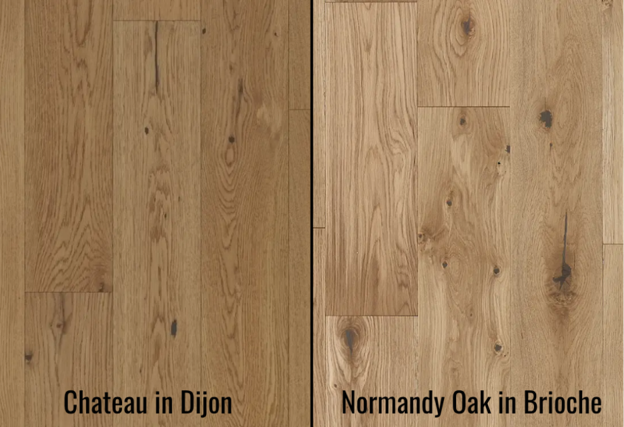
The hardest tone to set your floor against isn't another floor, it's a wall of wood cabinets. Wood cabinetry has come back in a real way. In the 2026 Houzz Kitchen Trends Study, wood passed white as the most popular cabinet choice. So the floor you choose now often sits against wood, not paint. When the floor and the cabinets land too close in tone, the line between them disappears. Two good woods flatten into one dull mass.
Value is what keeps that from happening, the plain difference between light and dark. Put a lighter floor under darker cabinets, or a darker floor under paler ones, and each keeps a visible edge. A mid-tone oak makes the most forgiving anchor. It runs warm enough to feel deliberate, but even enough to sit under cabinetry without pulling the eye off the room. When you do want the tones close, a buffer keeps them legible. Things like a painted lower cabinet run, metal hardware, or a rug at the toe kick do the job. Handle it that way and you match a wood floor to wood cabinets as two coordinated layers, not one flat wall of wood.
Pictured: Mannington's Chateau in Dijon and Normandy Oak in Brioche.
The Bold Difference That Looks Chosen, Not Accidental
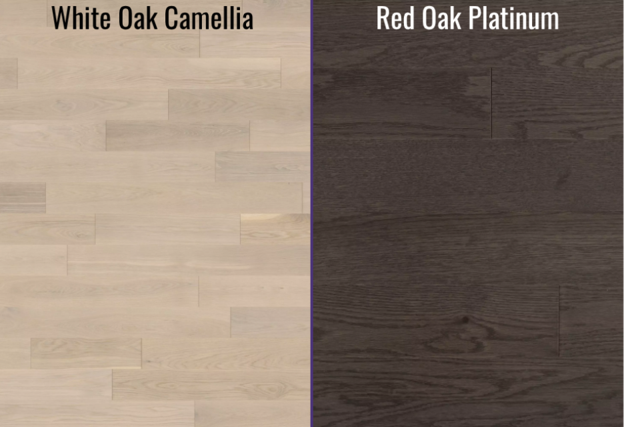
Everything so far keeps floors close in temperature. Sometimes you want the opposite, a pale floor in one room and a genuinely dark one in the next. Pairing light and dark wood floors can read as bold and intentional, and the line between “striking” and “scattered” is repetition. A single dark floor with nothing else dark in the home reads as the odd one out. Let that dark tone return down a hallway or at the far end of an open plan, and the repeat reads as deliberate.
Even at full contrast, the temperature rule still holds. A pale floor that leans neutral to cool needs a dark floor that leans the same way. A neutral-leaning brown holds up better than a strongly red wood, which clashes with the pale floor even while it contrasts. That leaves the amount of contrast in your hands, wide and dramatic or narrow and subtle, as long as the darker tone turns up in more than one place.
Pictured: Mirage's White Oak Camellia and Red Oak Platinum.
See Your Wood Tones Come Together at A Step Above Flooring
The rule that wood has to match was never really a rule, and by now you can see straight through it. Mixing wood floors on purpose comes down to a handful of relationships between tones, the kind you can learn to read and then apply with confidence. What looks like an accident of good taste is actually a series of decisions, and they're now yours to make.
These are the decisions worth getting right before the floor goes down, since a wrong undertone or a bad transition isn't something you swap out like a rug. Bring the tones you're weighing to a consultation, and let our team lay them side by side with you before anything is installed. Let's talk about your flooring project.