
Safe Flooring for Seniors Who Want to Stay in Their Homes
Safe Flooring for Seniors Who Want to Stay in Their Homes
.jpg)
If you're thinking about how to make your parent's home safer for them as they age, flooring is one of the most impactful places to start. About 14 million older Americans (roughly 1 in 4 people 65 and older) experience a fall each year, and falls are the leading cause of injury-related death for adults 65 and older in the U.S. Many of these falls happen at home, where flooring choices can make a meaningful difference. The scale of these numbers underscores how important it is to address what we can control.
But where to start? And will making things safer mean your parent's home starts to feel like a hospital? It doesn't have to. Aging in place doesn't require sacrificing the warmth and character of home. Safety and comfort can coexist.
This blog will guide you through your parent's home room by room, identifying specific risks and matching them with material solutions.
High-Risk Zones First: Bathrooms and Kitchens
Bathrooms and kitchens are statistically the most dangerous rooms because water exposure creates slip risk. Prioritizing these spaces makes sense both for safety and budget; addressing high-risk areas first can prevent the most catastrophic falls. Many families start here and phase in other rooms over time as budget allows.
When choosing flooring for seniors living at home, slip resistance is critical in wet conditions. Textured, matte finishes are much safer than glossy surfaces. Let's break down the best options for each room.
Bathrooms: Where Wet Feet Meet Hard Surfaces
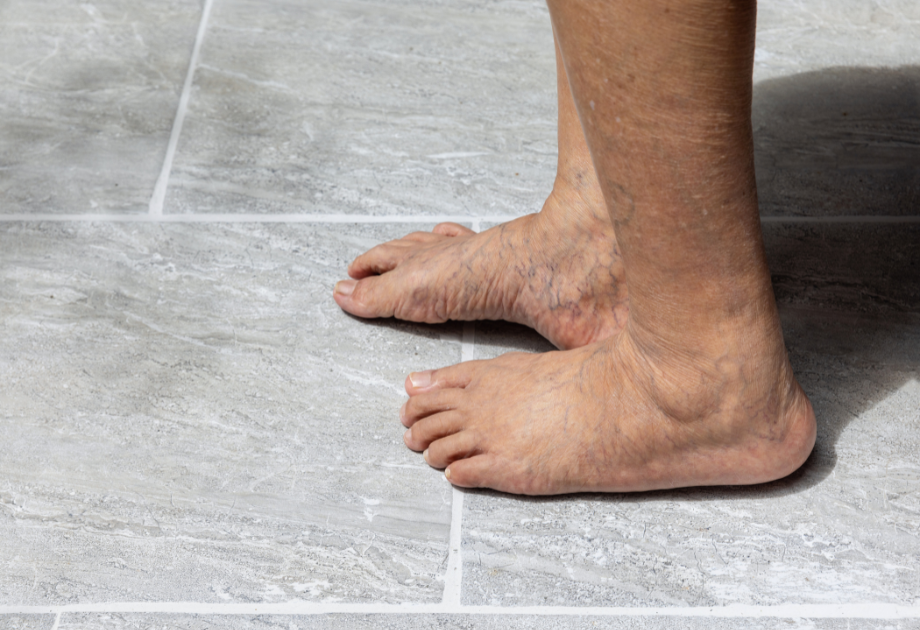
Bathrooms are risky because they involve water and quick movements like stepping out of the shower or turning at the sink. High-gloss tile or finishes become dangerously slick when wet, but plenty of options work beautifully in bathrooms. Non-slip bathroom tiles for elderly users should have a matte finish and visible texture. Here's what we typically recommend:
- Textured ceramic or porcelain tile with smaller formats (more grout lines = better traction)
- Slip-resistant luxury vinyl with textured surfaces
- Rubber flooring designed for wet environments
- Matte-finish natural stone with textured surfaces
Our team can help you choose the right fit.
Kitchens: Balancing Safety with the Reality of Spills
Kitchens face water, grease, dropped items, and frequent use. The floor needs to handle all of it while remaining slip-resistant and easy to clean. Here's what works well:
- Luxury vinyl plank (LVP) with textured, matte finishes
- Textured sheet vinyl with cushioned backing
- Textured ceramic or porcelain tile with matte finishes
- Slip-resistant natural stone with sealed, textured surfaces
Modern LVP mimics wood beautifully, so safety doesn't mean sacrificing the kitchen's warmth or style. Cushioned vinyl also offers some fall protection, softening the surface if a senior does lose their balance. Luxury vinyl offers versatility for families balancing safety, style, and budget. We'll help you find what works best.
Living Spaces and Bedrooms: Comfort Meets Safety

Living spaces and bedrooms face less water exposure, but they present their own challenges. Walkers, canes, and wheelchairs work best on firm surfaces, but firm surfaces don't cushion falls. Carpet provides cushioning, but it can catch wheels and resist mobility aids. Temperature comfort matters too, especially for seniors who spend a lot of time on their feet or have circulation issues.
The right choice depends on whether you or your parent use assistive devices and how you move through these rooms.
Carpet: Soft Underfoot, but Choose Wisely
Carpet can work well in bedrooms and living rooms, but pile height matters. Low-pile, tightly woven carpet provides warmth and softens impact if someone loses their balance. It works especially well for seniors with circulation issues, sensitive feet, or those who feel cold easily.
Thick, high-pile carpet is a different story: it creates trip risks, especially for those with shuffling gaits, and it resists walkers and wheelchairs. Aging-in-place checklists recommend avoiding deep-pile carpet and securing loose rugs. Look for carpet that's firmly installed with no loose edges. Carpet offers benefits in specific spaces, especially bedrooms where warmth and softness matter most. We can help you find the right carpet for your space.
Hardwood and Luxury Vinyl: Firm and Mobility-Friendly
Hardwood and luxury vinyl plank offer firm, smooth surfaces that walkers, canes, and wheelchairs navigate easily. They don't catch wheels or resist shuffling feet. However, hardwood can be slippery (especially with glossy finishes) and offers no cushioning if a fall occurs.
Luxury vinyl with textured, matte finishes and cushioned underlayment splits the difference: firm enough for mobility aids, forgiving enough to reduce fall impact, and slip-resistant. Our team can guide you to the best option.
The Details That Make a Difference: Transitions, Contrast, and Comfort
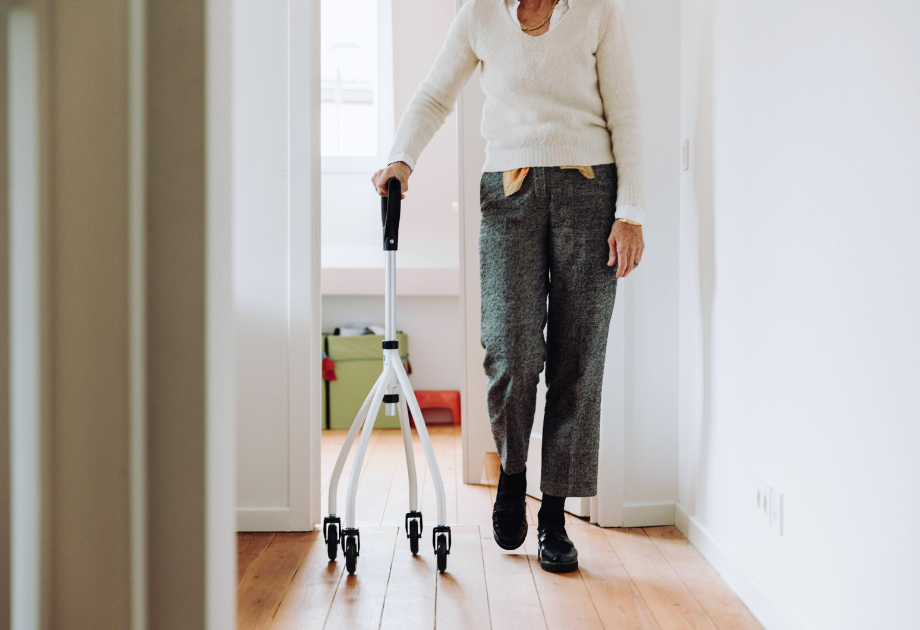
Material choice is only part of the equation. How flooring connects between rooms, how clearly it contrasts with walls and edges, and how it feels underfoot all affect whether a senior moves confidently or hesitantly through their home.
Eliminating Trip Hazards: Transitions and Rugs
If you have loose throw rugs anywhere in the house, remove them. They slip, bunch, and catch feet, making them one of the most common causes of falls.
Uneven thresholds between different flooring types (carpet to tile, hardwood to vinyl) create similar risks, especially for seniors with shuffling gaits or those using walkers and wheelchairs. Even small height differences can catch feet or wheels. Low-profile, beveled transition strips create smooth connections between rooms. Our team can help you choose the right transition materials for your space.
Color Contrast for Aging Eyes
Aging eyes (especially with cataracts, macular degeneration, or medication side effects) struggle with depth perception and low-contrast surfaces. When floors blend into walls or adjacent rooms, seniors can't tell where one surface ends and another begins. This makes them hesitate, shuffle, or misstep.
Choose flooring that clearly contrasts with walls, baseboards, and thresholds. Avoid busy patterns or floors that match the walls too closely. Clear visual boundaries help seniors move with confidence. We can help you select colors that work with your home's style while supporting safety.
Temperature and Cushioning: Comfort That Encourages Movement
Cold, hard floors (like unheated tile, bare concrete, or stone) can discourage seniors from walking through certain rooms. When floors hurt their feet or feel uncomfortably cold, they rush through or avoid those spaces entirely. That hurried movement actually increases fall risk.
Seniors with arthritis, circulation issues, or neuropathy benefit from floors that feel warmer and slightly softer underfoot. If you prefer tile or stone for durability or style, radiant heating can make those surfaces comfortable. We can install radiant heating and guide you through the process. Floors that feel good encourage steady, confident movement.
Let A Step Above Flooring Guide Your Safety Decisions
Every home is different, and so is every senior. The right flooring depends on mobility needs, vision challenges, daily routines, and budget. We work with families to find what fits.
When you schedule a consultation, we talk through what matters most and recommend options that balance safety with comfort and style. Acting on even one high-risk room is better than waiting until a fall forces the decision. We're here to help you get it right. This is about protecting independence and giving you peace of mind.
Schedule a consultation with our team to identify the flooring solutions that will keep you or your parent safe and comfortable.