
Sunroom Design Ideas, Flooring Edition
Sunroom Design Ideas, Flooring Edition
.jpg)
A sunroom is the room people daydream about. It's the space people gravitate toward on weekend mornings. It's the room that makes guests say, "I'd never leave this spot." All that natural light. The connection to the outdoors. The comfort of being inside while feeling like you're not. No wonder sunroom ideas dominate home design boards year-round.
But the same light that makes the room so appealing is also what makes sunroom flooring a different conversation. Standard window glass can transmit up to 74% of UVA radiation. Add temperature swings and moisture to that exposure, and every material decision changes. Fortunately, the materials that handle those conditions well also happen to look incredible. Let's get into what works and why.
What Makes Sunroom Flooring Different from Every Other Room
The living room gets foot traffic. The kitchen gets spills. A sunroom gets something no other interior room deals with: hours of direct, unfiltered sunlight on your floor every single day.
UV rays are responsible for roughly 40% of fading inside a home. That includes hardwood, furniture, and textiles. In a sunroom, the exposure is concentrated and prolonged. Without protection, fading and discoloration pick up speed after about three years. Then there's temperature cycling. In three-season or unheated sunrooms, the swing between morning chill and afternoon heat can be dramatic. Add humidity from condensation, plants, or nearby exterior doors, and you have a room that tests materials in ways a bedroom or den never will.
This isn't a reason to play it safe, though. It's a reason to choose well. Four-season, climate-controlled sunrooms offer the most flexibility. Three-season or unheated rooms narrow the field. Either way, knowing what your space demands is the first step toward getting it right.
The Materials That Earn Their Place in a Sunroom
So what actually works? The materials that perform well in sunrooms also happen to be strong design choices. Each one creates a different feel in the room. Your decision comes down to the look and feel you're drawn to as much as the conditions your sunroom creates.
Tile and Stone
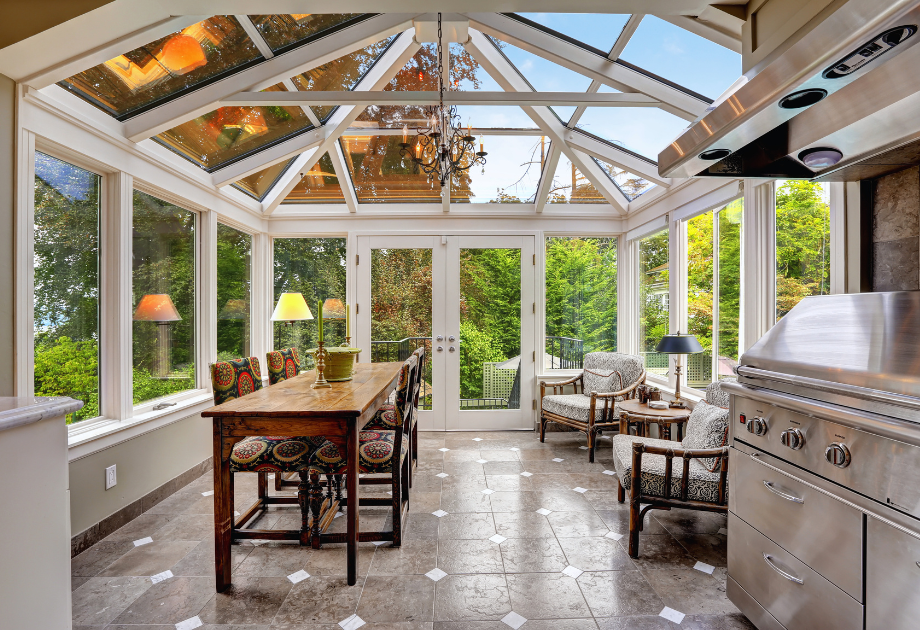
There's a reason tiles show up in so many conservatory and garden-room designs. Tile and stone bring a grounding, organic quality to a sun-drenched space. Something about natural materials under natural light just works. Porcelain and ceramic hold their color beautifully under direct sunlight and won't fade over time. In a room built around windows, that's a major advantage.
They're also thermally stable, fully moisture-proof, and exceptionally durable. The one caveat: tile can feel cool underfoot. But area rugs add softness, and radiant floor heating adds year-round warmth. From a design standpoint, the possibilities are wide open. Herringbone layouts bring movement and pattern. Large-format porcelain keeps things clean and modern. Stone-look finishes add organic texture. Each one shapes a room's character from the ground up.
Luxury Vinyl Plank
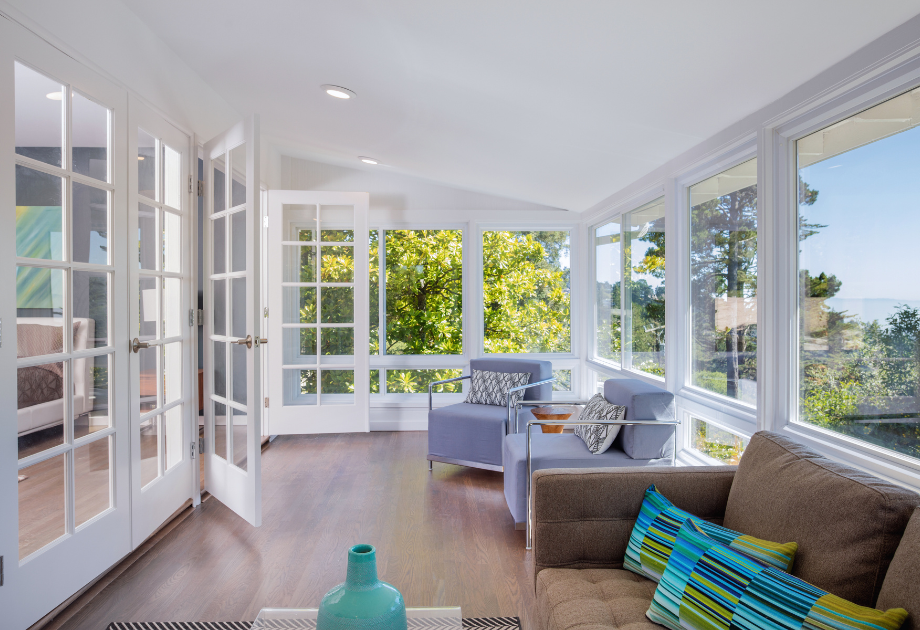
Luxury vinyl plank has earned its reputation as a go-anywhere material, and sunrooms are no exception. Warm wood-look tones create seamless visual flow between the sunroom and adjacent living areas. That matters when the goal is making this space feel like a natural extension of the home. It's waterproof, scratch-resistant, and available in designs that complement nearly any interior style.
The performance holds up, too. Advanced wear layers can block up to roughly 95% of UV damage. SPC (stone plastic composite) cores handle temperature swings better than standard cores. That makes them a strong pick for sunrooms. One note worth flagging: not all LVP is built for these conditions. Quality and core construction matter. Some products aren't rated for unheated spaces. If your sunroom isn't climate-controlled, check the specs before committing.
Engineered Hardwood
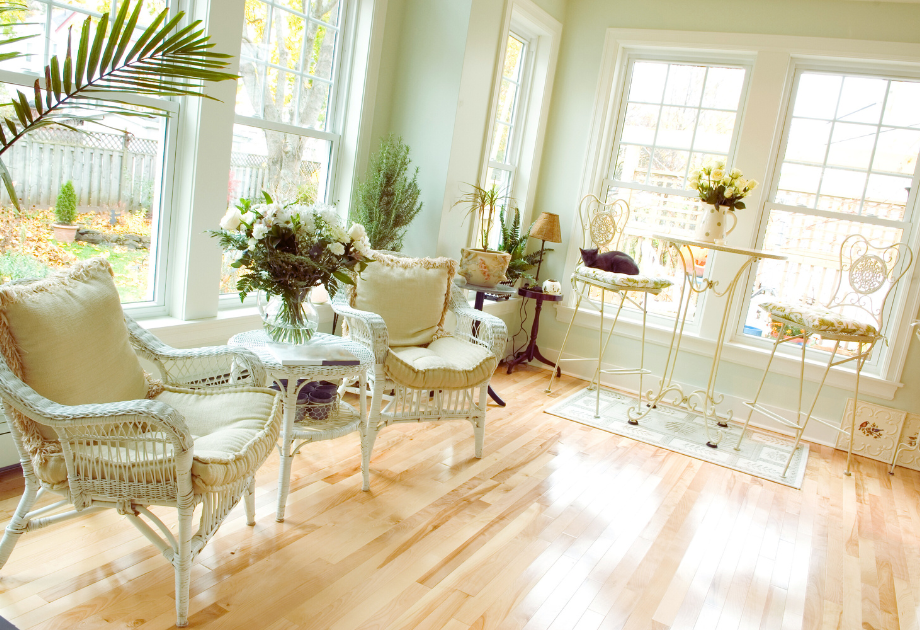
Real wood in a sunroom? Absolutely, if the space is climate-controlled. Engineered hardwood performs well when temperature and humidity stay consistent. It brings a richness and warmth that other materials can echo but not quite replicate. In a room flooded with natural light, that character deepens.
One thing to know: sunlight shifts wood color over time, and the direction depends on the species. Domestic hardwoods like oak and maple tend to lighten with prolonged sun exposure. Exotic species like Brazilian cherry darken noticeably. UV-inhibiting finishes slow this process. Pairing them with window treatments and rotating your furniture now and then helps keep the color even. Solid hardwood, however, is not a fit here. It reacts too strongly to moisture and temperature changes for sunroom conditions.
Designing for Connection: How Your Sunroom Floor Sets the Tone
Your sunroom connects to the rest of your house, and the flooring should reflect that. When the color and material family complement the rooms around it, the whole space feels comfortable. You walk from the living room into the sunroom and nothing feels out of place. The rooms belong together, and the floor is a big part of why.
Color plays a role here beyond looks. Lighter tones reflect warmth and bring out the natural light that makes a sunroom so appealing. In a small sunroom or a south-facing layout, a lighter floor can make the space feel twice as open.
The transition at the threshold deserves attention, too. Where the sunroom meets the hallway or living room, a coordinating tone or material shift turns two rooms into one. That's the detail that makes a sunroom feel like it was always part of the plan.
What to Skip (and Why It Matters)
This is a room filled with light and warmth and life. It deserves flooring that can match that energy year after year. A few popular materials fall short here.
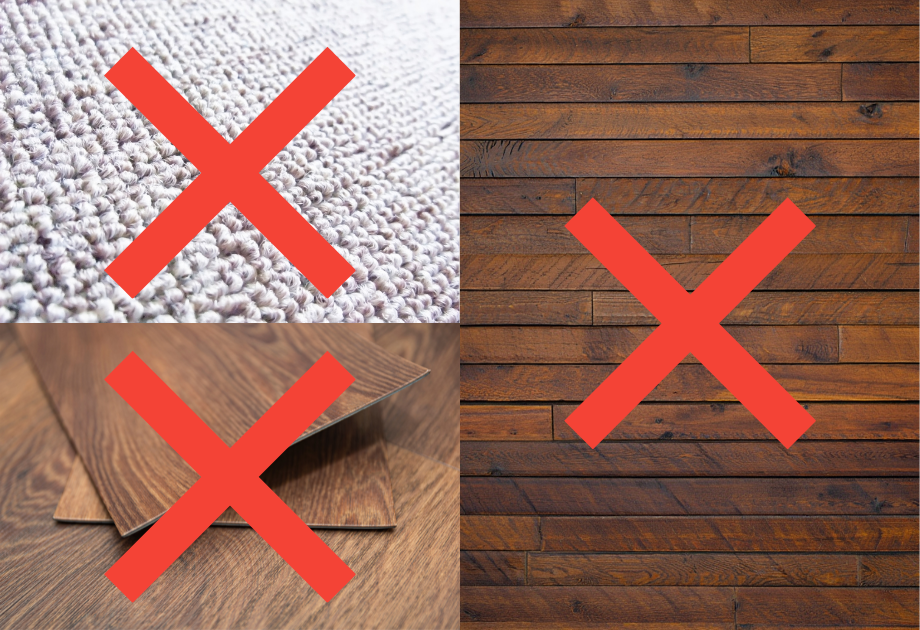
Solid hardwood is gorgeous in a lot of rooms, but sunrooms ask too much of it. The moisture and temperature swings cause solid planks to expand and contract, and over time, that leads to warping.
Most carpet fades quickly under prolonged UV and wears down faster in a room that gets this much sun. It's a cozy choice in a bedroom, but a sunroom's conditions shorten its lifespan.
Low-quality laminate or vinyl without good wear layers won't hold up the way you need them to. In a bright, active room like a sunroom, the difference between a quality product and a budget one shows up fast.
The best flooring for a sunroom is the one that still looks great years down the road.
See What's Possible at A Step Above Flooring
Your sunroom is one of the best rooms in your house. The flooring should feel that way, too. When you're ready to see tile, luxury vinyl, or engineered hardwood up close, our showroom is a great place to start. The team at A Step Above Flooring can help you find the right material for your sunroom's setup and your style, so the finished room feels exactly the way you pictured it.
Schedule a consultation and let's get started.