
The Best Flooring for Your Home's Architectural Style
The Best Flooring for Your Home's Architectural Style
(2).jpg)
A floor can be stunning on its own and still feel wrong in the wrong room. That tension almost always comes down to one thing: the floor doesn't match the architecture above it.
Every home carries a design personality shaped by its era, its proportions, and its details. The trim sets an expectation. The ceiling height reinforces it. The floor either completes that picture or works against it, and you can feel the difference the moment you step inside.
Cincinnati's tri-state area spans nearly two centuries of residential architecture. The "right" floor here depends on the house. Here's how to think about that match, style by style.
Craftsman Homes: Warm, Natural, Built by Hand
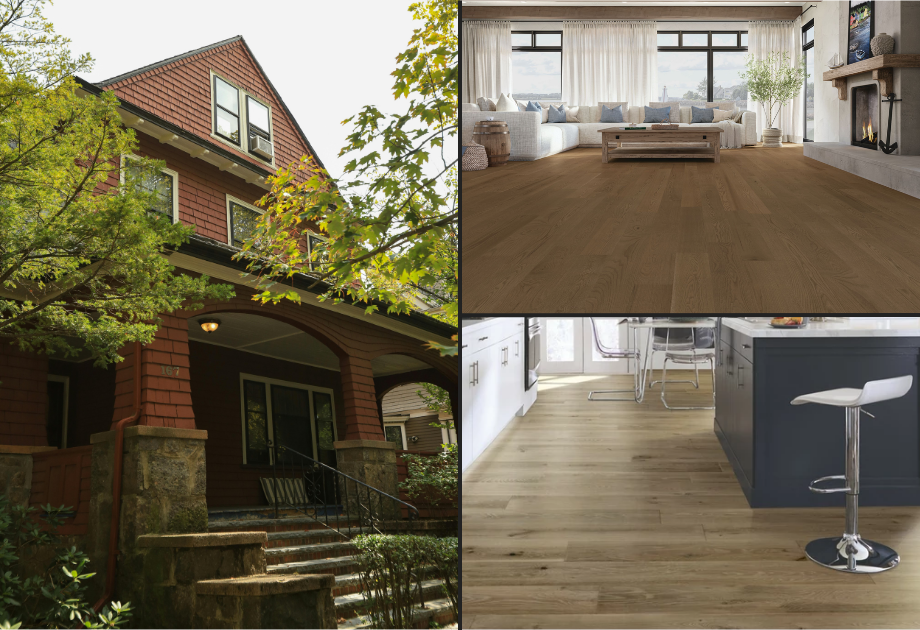
Craftsman homes emerged in the early 1900s as a reaction to Victorian excess. They favor natural materials, visible woodwork, and handcrafted detail over formality. You'll find them throughout Cincinnati, but they're especially common in Pleasant Ridge, Oakley, and Hyde Park.
That emphasis on craftsmanship should guide the floor. Quarter-sawn white oak or red oak in a warm, mid-tone stain pairs naturally with the rich woodwork these homes are known for. Keep the finish matte or satin so the grain stays the focal point. A wire-brushed or lightly hand-scraped texture adds the final layer of character, one that feels crafted, never manufactured.
What to look for:
- Warm mid-tone oak in a wide plank with a brushed matte finish. Try Mirage DreamVille Charlottetown in 7¾".
- Wire-brushed white oak with visible grain and substance underfoot. Try Mannington Maison Normandy Oak in a 7" plank.
Traditional and Colonial Homes: Polished, Balanced, Rooted in History
.png)
Traditional and colonial homes are built on symmetry, proportion, and structured detail. Crown molding, paneled doors, and formal entryways define the character. In Cincinnati, Colonial and Greek Revival styles shape the streetscapes of Clifton and Walnut Hills.
The floor should feel polished and intentional. Rich-toned hardwood flooring in walnut or dark oak brings the visual weight these rooms call for. A satin or semi-gloss finish pairs naturally with detailed trim work. Plank widths should stay narrower to mid-range. Anything too wide loosens the room's sense of order. Pattern is where these homes come alive. Herringbone and parquet date back to Georgian-era hardwood floors. Engineered wood has made them far more stable.
What to look for:
- Rich-toned engineered herringbone that adds formality without stiffness. Try Mannington Latitude Park City Herringbone in a 7½" format.
- White oak herringbone with a brushed matte finish for a polished but natural look. Try the Mirage Muse Collection in 5" herringbone.
Farmhouse and Modern Farmhouse: Where Rustic Meets Refined
.png)
Farmhouse style spans a wider range than any other on this list. Classic farmhouse leans into reclaimed materials, visible character, and lived-in warmth. Modern farmhouse refines that palette with cleaner lines and lighter tones. The floor you choose depends on where you fall on that spectrum.
At the classic end, wide-plank hardwood with visible knots and hand-scraped texture sets the tone. Grain stays front and center. Tones run warm and weathered. At the modern end, the palette lightens. Whitewashed oak and pale gray replace heavy distressing. The finish smooths out, but the plank stays wide. That's the common thread across the entire farmhouse range.
What to look for:
- Wide-plank hardwood with reclaimed oak character for classic farmhouse warmth. Try Mannington Riverwalk in a 6.5" plank.
- Distressed wood-look LVP that handles heavy kitchen traffic. Try Karndean Van Gogh in a 7" plank.
- Soft white oak with a smooth finish for a modern farmhouse feel. Try the Mirage Blanc Collection in 7¾".
Mid-Century Modern Homes: Clean Lines, Natural Warmth
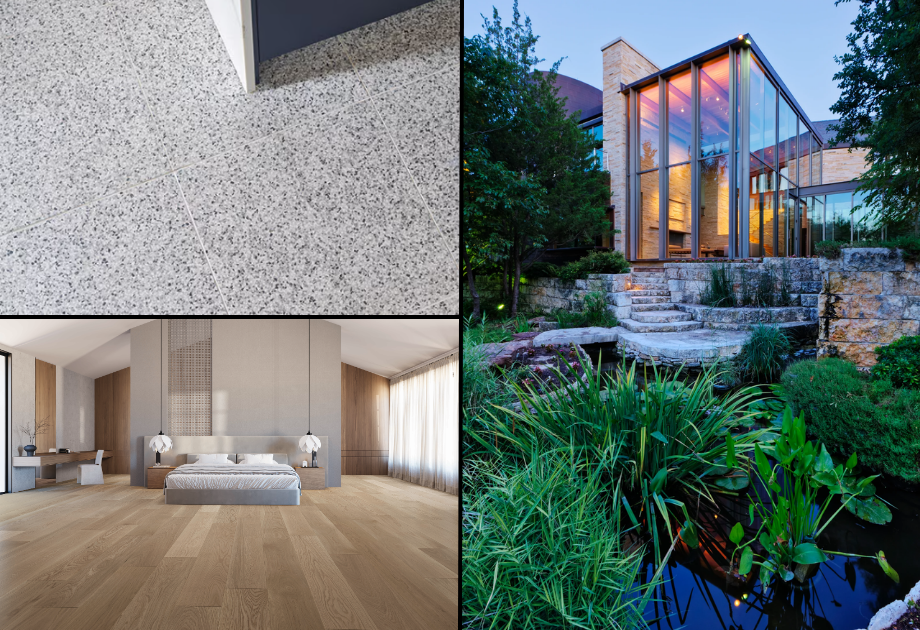
Mid-century modern homes blur the boundary between inside and outside. Open floor plans, walls of glass, and minimal ornamentation let natural light and materials do the work. The floor should feel like part of the landscape outside, not something laid on top of it.
Lighter to mid-tone white oak with minimal grain variation keeps the visual field calm. Narrower plank widths and smooth finishes honor the era's proportional sensibility. The goal is warmth without visual noise. For a bolder statement, terrazzo tiles tap into the style's more expressive side. The best mid-century floors pull warmth from the material itself rather than from heavy texture or dark stain. That restraint is what keeps the room feeling open and connected to the outdoors.
What to look for:
- Light white oak with minimal grain and a smooth matte finish for clean, warm rooms. Try the Mirage Bluum Collection in 5".
- Matte terrazzo-look porcelain designed with mid-century spaces in mind. Try Daltile Modernist.
Contemporary Homes: The Art of Restraint
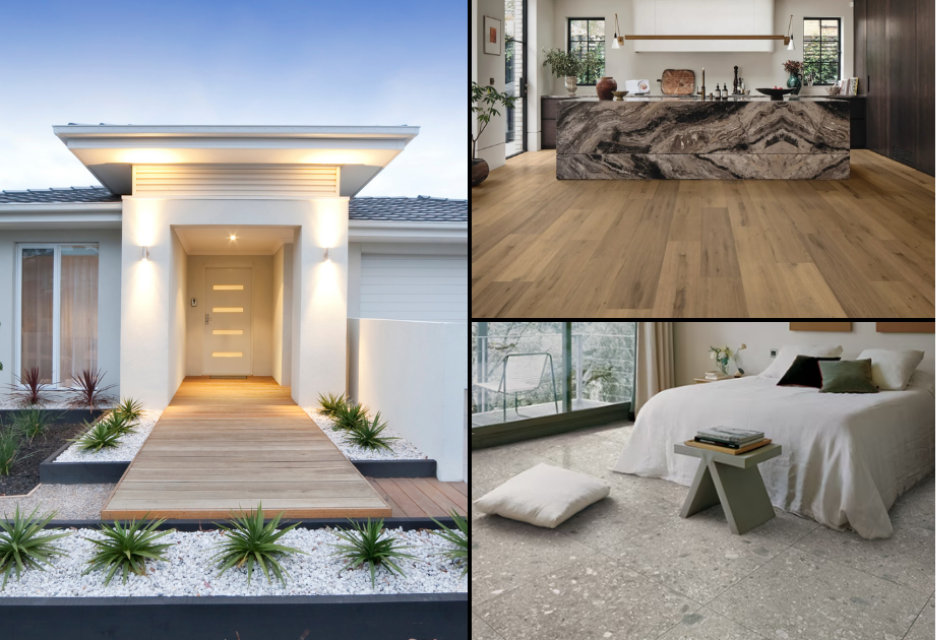
Contemporary architecture earns its drama through editing. Every surface and material is deliberate. The floor is no exception.
Wide planks (seven inches and above) with minimal character variation anchor the space. Cool or true-neutral tones and smooth, matte finishes keep things clean. Architecture and furnishings take the lead. Large-format porcelain tile is another strong direction here. Fewer seams create the continuity that open-concept layouts depend on. Newer construction in Indian Hill and renovated spaces in Mount Adams show this approach at its best. The strongest contemporary floors come from editing down to one material and one tone. Carry that through the main living areas, and you get the continuity these homes are designed around.
What to look for:
- Sleek, minimal LVP in larger formats that let the room breathe. Try Karndean Opus.
- Large-format stone-look porcelain with fewer seams for open-concept continuity. Try Daltile Assemble.
Find the Floor That Speaks Your Home's Language with A Step Above Flooring
The best flooring for your home starts with understanding what the house’s architecture communicates. That's the kind of design-fluent thinking the team at A Step Above Flooring brings to every project.
They've spent over 30 years working across the Cincinnati tri-state area. They know the full range of local architecture from the inside. That experience is what separates a floor that looks fine from one that feels right.
Applying this framework to your own space is where expert guidance makes all the difference. Schedule a consultation and find the floor that finishes the story your home is telling.