
Allergy-Conscious Flooring Choices for Healthier Homes
Allergy-Conscious Flooring Choices for Healthier Homes
.jpg)
When colder weather keeps doors closed and families spending more time indoors, airflow drops and indoor air circulates less frequently. Outdoor allergens may stay outside, but dust, pet dander, and other particles inside the home have fewer opportunities to clear out. As daily movement stirs those particles up again and again, floors become one of the primary places where allergens settle, collect, and reenter the air.
Flooring covers every room in your home, but most families think of it in terms of color, style, or softness, not how it behaves once dust, pollen, and pet dander start to settle. Understanding that behavior is the first step toward flooring choices that support easier cleaning and better day-to-day comfort. This blog walks through how allergen buildup happens, how construction details influence it, and what to consider when choosing allergy-conscious flooring with professional guidance.
Allergens Live on the Floor More Than You Might Think
Most airborne allergens do not stay suspended. They fall to the floor and settle into surfaces, where foot traffic, pets, and children stir them back up. These particles do not land once. They cycle through the air and across surfaces multiple times a day, contributing to the sense that allergy triggers never fully go away.
This is why the floor plays such a major role in household exposure. Research from the Asthma & Allergy Friendly® Certification Program outlines how flooring contributes to allergen accumulation and redistribution, especially when dust and dander build up faster than they can be cleaned. For allergy-aware homes, it is not only about what comes in from outside. It is also about what stays underfoot.
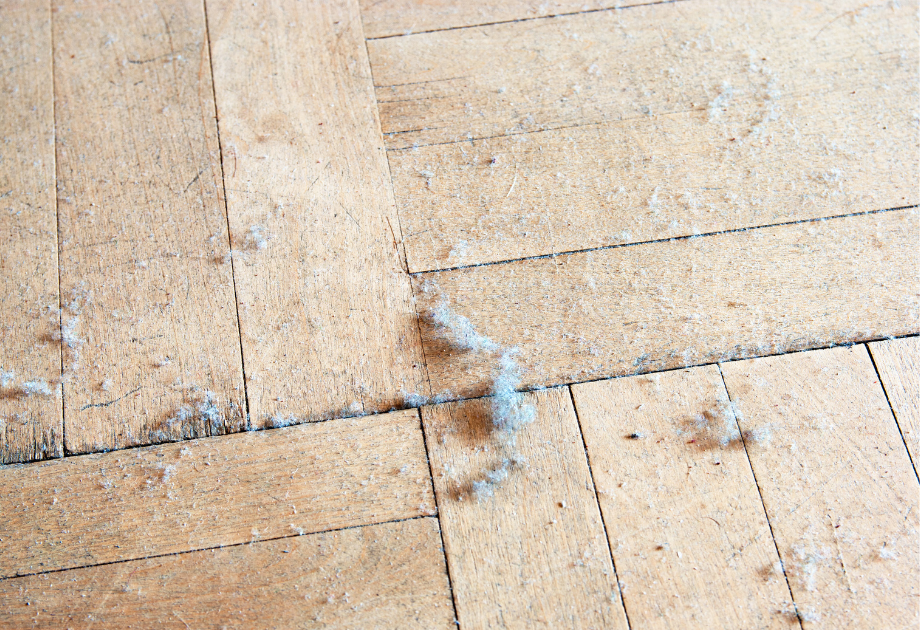
Floor Texture Plays a Big Role in Dust and Dander Buildup
The texture of a floor directly affects how allergens behave. Smooth surfaces make it easier to remove dust, while grooves, pores, and embossed patterns give debris a place to settle and stay. What looks like subtle patterning can quickly become a collection zone, especially in high-traffic areas.
These surface differences are not always obvious at first glance. But they matter once cleaning routines begin. Our breakdown of surface texture choices explains how finish decisions that affect upkeep often start with texture, and why it is worth considering how a floor will behave once daily life sets in.
Flooring Choices Shape How Allergens Build Up at Home
When evaluating allergy-conscious flooring, it is not just the surface material that matters. It is how the entire flooring system interacts with allergens over time. Categories like carpet, hardwood, tile, laminate, and vinyl plank each bring different strengths and challenges, shaped by seams, padding, installation method, and maintenance routines.
Rather than trying to identify a single solution, families benefit more from understanding how each option performs in the context of their routines, sensitivities, and household layout. The sections that follow explain how specific flooring details shape allergen buildup and cleaning effort over time.
Gaps, Seams, and Edges Act as Allergen Traps
Every seam is an opportunity for dust and debris to collect. That includes grout lines between tiles, beveled edges on planks, and transitions between rooms. Over time, these edges hold allergens that routine cleaning tools struggle to reach.
High-precision installation helps reduce these traps by keeping materials tight, joints sealed, and transitions smooth. These are the overlooked flooring details that influence long-term flooring performance and contribute to a cleaner home environment day after day.
Padding and What Sits Below the Floor Can Hold More Than You Expect
Beneath the visible surface, underlayments and padding influence how a floor behaves. Moisture-prone subfloors or foam layers with open-cell structures retain dust, dander, and humidity, all of which contribute to allergen buildup over time.
This is especially relevant when selecting flooring for basements, bathrooms, or humid areas. Decisions about what lies beneath the floor are not only about softness or sound absorption. They shape how well a floor supports long-term comfort, cleanliness, and performance.

Soft Flooring Can Still Work in Allergy-Aware Homes
Carpet and area rugs are often assumed to be incompatible with allergy-aware living. That assumption does not always hold up. Construction matters more than category. Low-pile carpets with dense fibers keep particles closer to the surface, which allows for more effective removal with proper vacuuming. Placement matters as well. Softer surfaces typically perform better in bedrooms or low-moisture spaces than in basements or entryways.
What counts is whether the material aligns with the space, humidity level, and cleaning routine. Families weighing warmth and comfort alongside sensitivity concerns often find that choosing carpet thoughtfully allows soft surfaces to support both livability and cleaner outcomes when used intentionally.
Hard Surface Floors Support Easier Day-to-Day Cleaning
Hard surfaces like hardwood, engineered wood, tile, laminate, and vinyl plank offer smoother profiles and sealed finishes that simplify routine cleaning. These materials do not trap allergens as deeply and allow for quicker removal using microfiber tools or damp cleaning methods.
That is one reason families often gravitate toward flooring choices that fit your needs when looking for practical, lifestyle-driven solutions. While hard floors are not automatically better for every household, their maintenance profile aligns well with busy routines focused on reducing everyday exposure.

Everyday Cleaning Habits Reinforce Smart Flooring Decisions
Even the right material still requires care. The difference lies in how much effort it takes to maintain. High-efficiency vacuum filtration, consistent dust removal, and surface-appropriate cleaning methods all influence how well a floor supports allergen reduction.
Floors that contribute to supporting healthier indoor air do so as part of a broader system. Flooring choices, installation quality, and daily habits work together to shape long-term comfort.
Explore Allergy-Conscious Flooring with A Step Above Flooring
Clean does not always look clean. Comfort does not always mean softness. The most allergy-conscious flooring choices support your routine, limit buildup, and contribute to an indoor environment that feels easier to live in every day.
At A Step Above Flooring, we look at how every layer works together. Our expert team helps families evaluate materials, placement, and installation details that support healthier homes alongside thoughtful design. If you are ready to explore allergy-conscious flooring options, we are here to help you move forward with clarity and confidence.