
Best Outdoor Flooring for Patios, Porches, and Outdoor Rooms
Best Outdoor Flooring for Patios, Porches, and Outdoor Rooms
.jpg)
“Ah, the great outdoors!” and “Home, sweet home.” These two phrases are the backbone of daily American life. And now our kids are on board when they tell us to “touch grass.” So, it’s the natural next step to bring your home life a little bit more... outside. Enter: an outdoor living space. No matter what type of space you have, though, a patio, porch, or outdoor room each experience the elements in a different way than the rest of your home.
Floors already have many important jobs. They’ve got to look good while still standing up to foot traffic, spills, kids, and maybe even pets. But the flooring in your outdoor living space has to deal with even more. UV rays are the common enemy of all the outdoor rooms, but open spaces also have to deal with Cincinnati’s crazy weather patterns.
So, how do you balance "backyard vibes" with "practical durability"? In this guide, we’ll break down the best flooring for every type of outdoor space, what makes them winners, and which materials you should avoid.
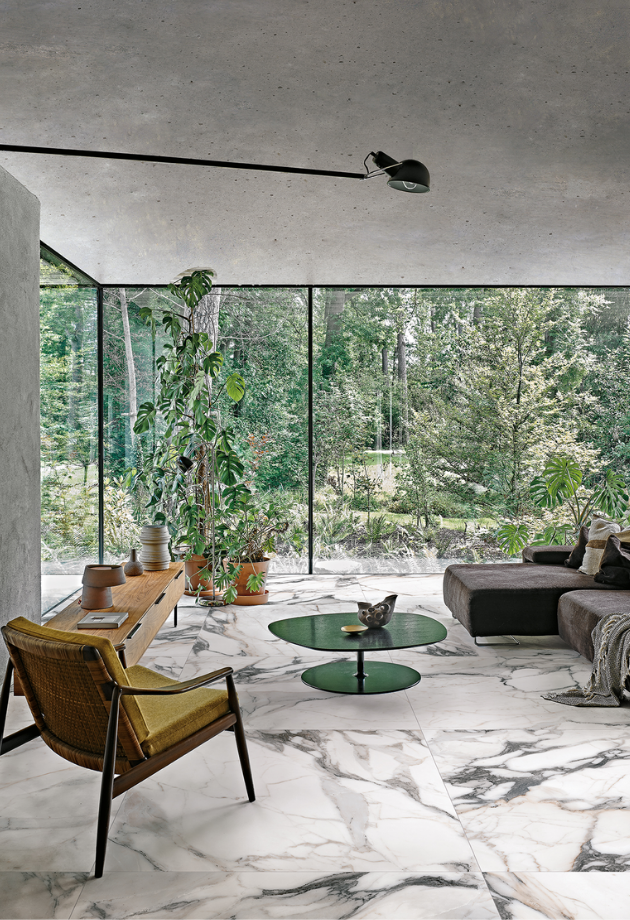
Best Flooring for Screened Porches and Three-Season Rooms
A screened porch or three-season room is a hybrid space. It's part indoor, part outdoor, and the flooring has to respect both sides of that identity. Screens and storm windows keep the bugs and most of the weather out. They don't do much to regulate temperature or humidity. Your floor has to live through the same muggy summer days and chilly fall mornings the outside air does. It needs to hold its shape through all of it, year after year.
[H3] Best picks for a screened porch or three-season room:
- Porcelain tile: Porcelain is dense enough to block moisture at the surface. This keeps the tile stable through humidity shifts and temperature swings. Hamilton Parker's Origines De Rex is a standout option in this category.
- Outdoor-rated luxury vinyl plank: Outdoor-rated LVP is built to flex with temperature changes instead of buckling under them. This is exactly what you need in an unconditioned room. Make sure the product is rated for wide temperature ranges; standard indoor LVP warps in these spaces within a year or two. Mannington's Adura Pro Rigid is worth a close look.
- Sealed concrete tile: Sealed concrete tile gives you the texture and tonal depth of concrete without the commitment of pouring a slab. Hamilton Parker's Artillo is a beautiful example of the style.
What to avoid:
Skip standard laminate, indoor-grade carpet, and solid hardwood. All three react too much to humidity and temperature changes in an unconditioned room.
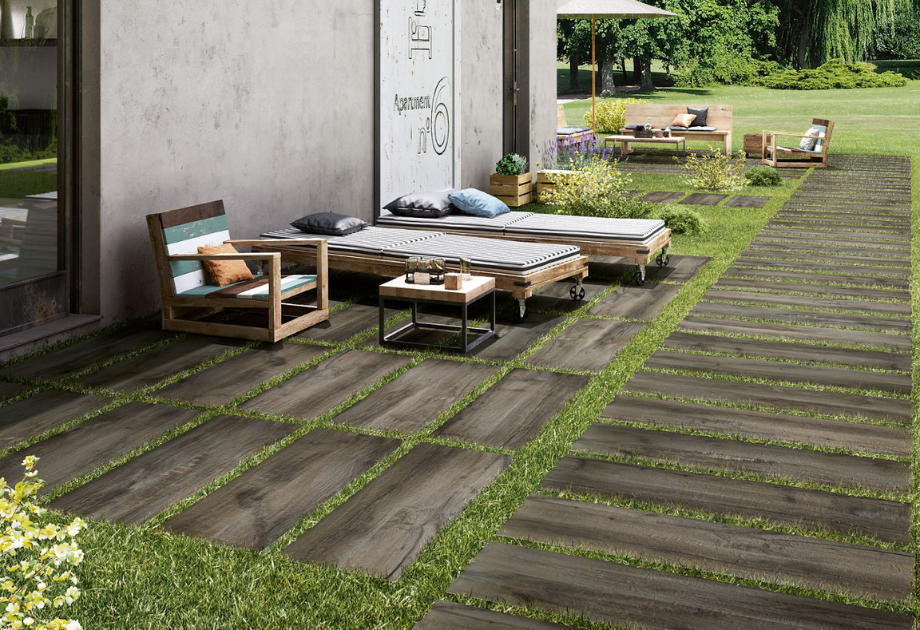
Best Flooring for Covered Porches and Patios
A covered porch or patio is the middle ground of outdoor spaces. The roof overhead blocks most of the rain and UV that would otherwise land on your floor. This opens up more material options than a fully open space would allow. That protection isn't total, though. Wind-driven rain still reaches the floor during storms, and the roof traps heat during the day and releases it at night. This means your floor cycles through bigger temperature shifts than an open patio does. You need a material that can handle those shifts without cracking or warping.
Best picks for a covered porch or patio:
- Porcelain pavers: Porcelain pavers absorb less than half a percent of the water that hits them. This is the specification that carries a material through freeze-thaw winters without cracking. Daltile's Commissary is a wood-look option that holds up to the conditions without sacrificing warmth.
- Outdoor-rated porcelain tile: Outdoor-rated porcelain tile gives you the same freeze-thaw resistance in a smaller format than pavers. This opens the door to mosaics, patterns, and design-driven layouts that pavers can't deliver. Hamilton Parker's Charisma is a particularly versatile collection.
- Granite or slate: Granite and slate are dense natural stones that handle freeze-thaw cycling without issue. Plus, they bring a depth of color and grain pattern that manufactured materials can't replicate. Daltile's granite collection is a strong starting point.
What to avoid:
Sandstone and limestone are beautiful but sit in a different category. Both fail in Ohio winters without consistent sealing, so plan the maintenance accordingly if you must have the look.
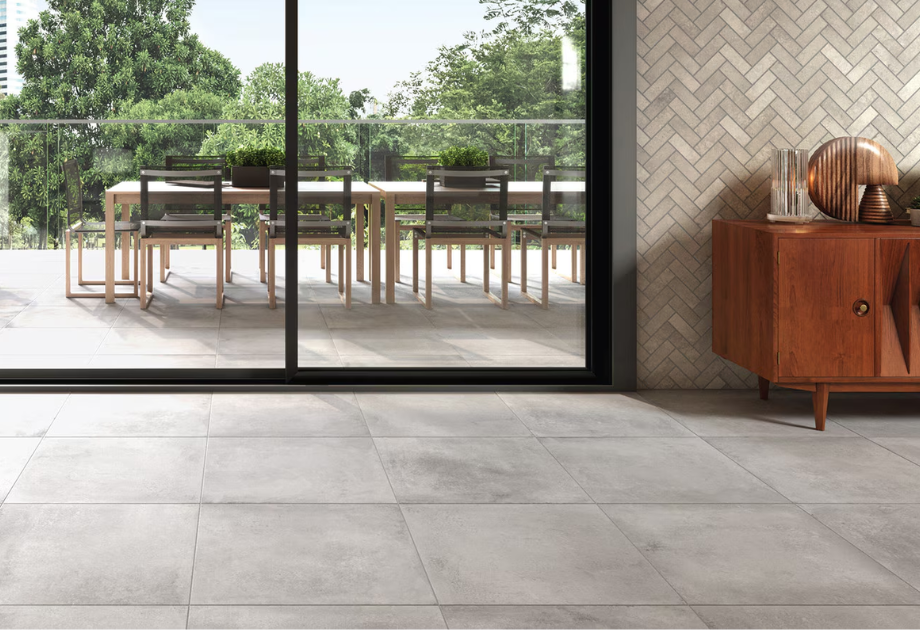
Best Flooring for Open Patios and Outdoor Entertaining Areas
An open patio is outdoor flooring at its most demanding. Without a roof or walls, your floor takes the full brunt of the weather. Cincinnati's typical freeze-thaw weather is the hardest on a floor. Water seeps into any pore or seam in the material, and then expands when it freezes, which can split the material from the inside. The flooring you choose has to keep water out well enough to survive that cycle, year after year.
Best picks for an open patio or entertaining area:
- Porcelain pavers: Porcelain pavers barely absorb water at all, which keeps them intact through freeze-thaw winters. Installers can dry-set them over compacted gravel for drainage or use pedestal systems for raised spaces like roof decks. Daltile's Rekindle is a concrete-look option that holds up to full exposure.
- Granite, bluestone, or slate: These dense, natural stones resist freeze-thaw cycling. They even often outlast the home itself when they're installed well. The upfront cost runs higher and the base preparation takes more work, though. This is partly because the stone itself is heavy and partly because full exposure leaves less margin for error. Daltile's slate collection is worth exploring.
- Quarry tile: Quarry tile is made from natural clay and shale fired at high temperatures, which gives it the density to handle freeze-thaw cycling and heavy foot traffic without cracking. Its unglazed, textured surface is naturally slip-resistant, which matters on a patio that gets wet. Daltile's quarry collection covers the material in earthy reds, grays, and charcoals.
What to avoid:
Skip standard ceramic tile, since it absorbs too much water to survive a freeze-thaw winter. Skip softer natural stones like sandstone and limestone, which fail fast without aggressive sealing. And skip anything rated for indoor use only, no matter how outdoor-friendly the material looks at the showroom. Seeing tile and stone options in person is especially valuable for open patios, since the margin for error is smaller here than anywhere else in the home.
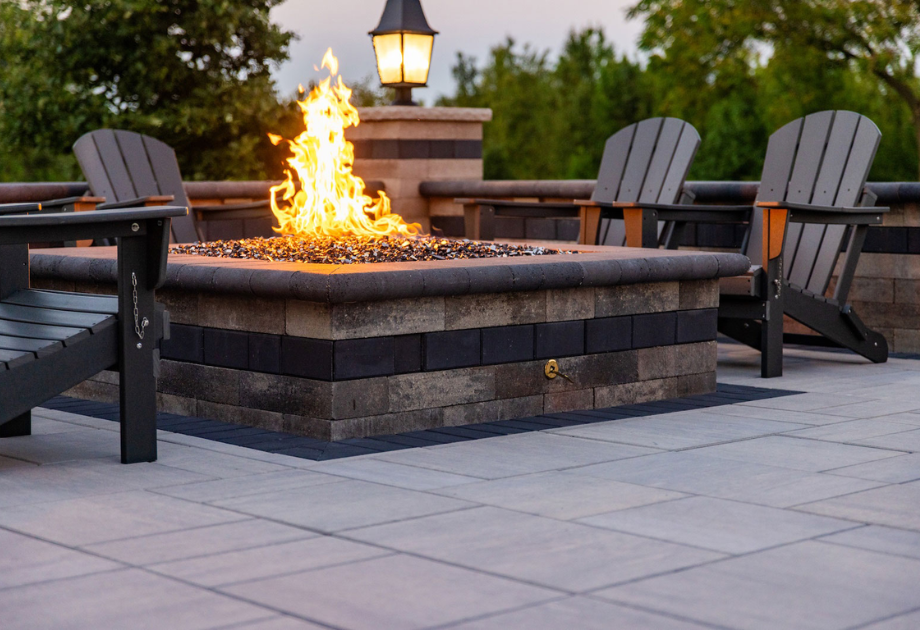
What Makes or Breaks an Outdoor Floor
Even the right material can fail if the conditions around it aren't managed. Water is the biggest variable. It works its way into any seam or pore in the material, and when cold weather freezes that water, it expands and splits the material from the inside. Proper slope is the main defense, because it keeps rain moving off the floor instead of pooling on it.
Slip resistance matters too, since outdoor floors are wet often enough that traction is a real safety concern. A matte or textured finish grips a damp surface; a glossy one gets dangerous the moment it rains.
Installation is the factor that ties everything else together. Outdoor work requires base preparation, drainage planning, and material-specific techniques that go well beyond what indoor floors need. Getting the preparation phase right often decides whether an outdoor floor holds up for decades or starts failing in its second year.
Find the Right Outdoor Flooring at A Step Above Flooring
Bringing "home, sweet home" out to meet "the great outdoors" is a matter of picking the right floor for the space you actually have. Each space asks different things of its flooring, and the right material is the one that matches what your porch or patio actually faces every day. A Step Above Flooring has helped homeowners across the Cincinnati tri-state area sort through exactly these decisions for over thirty years. Schedule a consultation whenever you're ready to talk through what your space needs.