
Flooring Around the World: 5 Global Styles You Can Make Your Own
Flooring Around the World: 5 Global Styles You Can Make Your Own
.jpg)
Somewhere in your saved photos, there's a room you've never forgotten. For some, it's zellige shimmering up a Marrakech courtyard wall. For others, it's pale oak running the length of a Copenhagen flat. Photos like these are easy to collect. What they never include is a path into your own house: a name for the look, the craft behind it, and a local source for the materials.
This guide supplies that path for five traditions in global flooring design. While the styles come from around the world, every material behind them is sold and installed right here in Greater Cincinnati.
So the real choice is which one fits your house, and two questions settle it. What do you want to feel underfoot, and what do you want the room to say? The five traditions ahead each answer differently, and the one whose answer sounds like yours is the one to bring home.
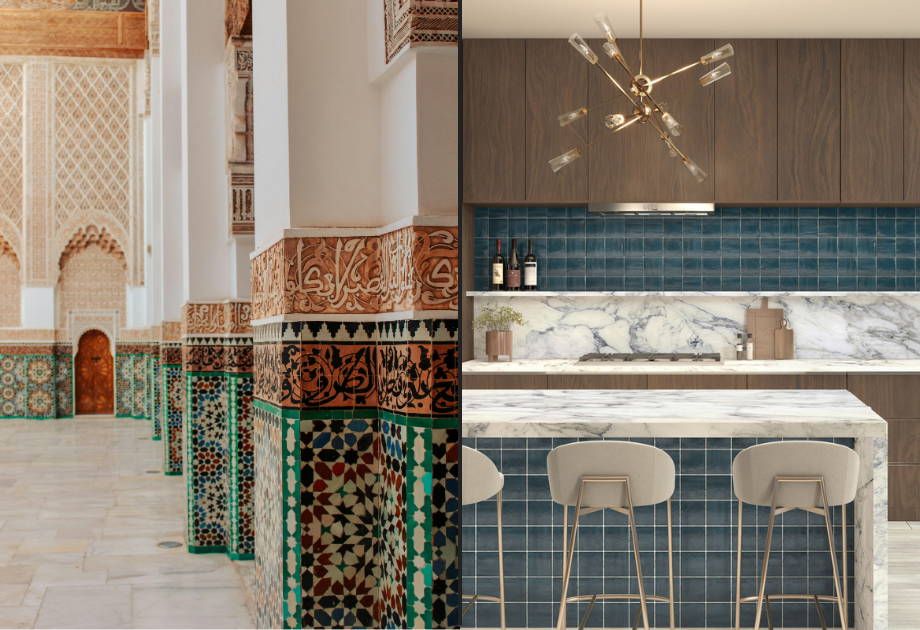
Moroccan Zellige: Light That Moves Across the Wall
Zellige tile starts as natural clay from the hills around Fez, Morocco. Artisans cut each piece by hand, fire it in wood-burning kilns, and finish it with a hand-applied glaze. The end result is that no two tiles come out alike, and the makers wouldn't want them to. They treat the color variation and the uneven glaze as the design itself.
That handwork is why a zellige wall seems to shimmer. The hand-applied glaze pools thick in some spots and thin in others, so a single green looks deeper where the glaze is heavy and lighter where it thins out. One color ends up reading as a whole range of itself across the wall. That same uneven surface ripples and catches the light at different angles, scattering it in soft reflections. It's the kind of handmade depth that has pushed irregular, artisanal tile to the front of the current trends in tile.
The craft does come with a catch. The fired tile is too brittle for foot traffic, and the uneven surface is a tripping risk besides. So Moroccan tile belongs on the wall, as a backsplash, a shower surround, or an accent. There, the irregularity that keeps it off the floor becomes the whole reason to install it.
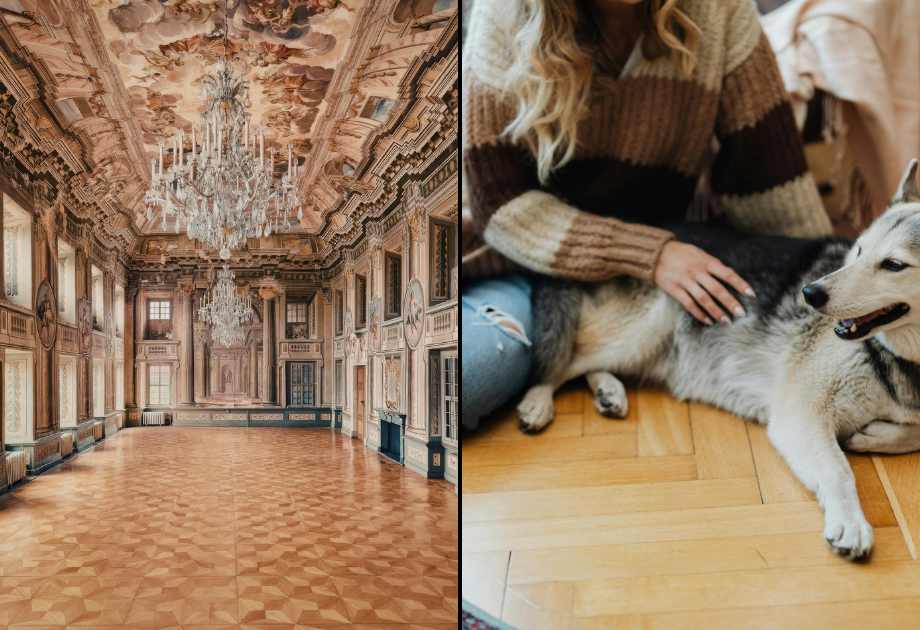
European Parquet: Geometry with a Pedigree
European parquet is hardwood laid in a repeating geometric pattern instead of straight rows of planks. The style traces back to the Palace of Versailles, which installed its first parquet panels in 1684. It has signaled craftsmanship ever since. That same geometry now goes into ordinary homes, in both solid wood and engineered planks.
You get four patterns, and they range from understated to unmistakable. Herringbone is the workhorse. Its planks meet at right angles in a tight zigzag, which adds movement without demanding attention. Chevron sharpens that zigzag into clean continuous points, a little more deliberate, a little more modern. Basketweave reads as woven squares and leans traditional. Versailles panels sit at the far end, large framed squares of interlocking diagonal wood that turn a floor into the room's centerpiece.
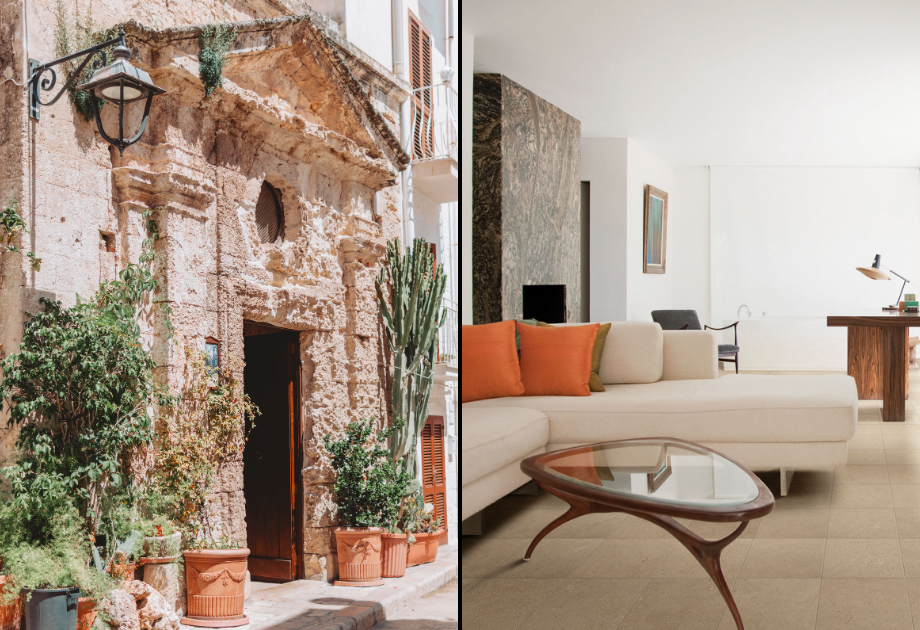
Mediterranean Limestone and Terracotta: Floors That Age in Your Favor
Mediterranean flooring is one of the few floors that looks better the longer you live on it. Every year of footsteps builds a patina, the soft surface character that comes from being lived on. The color deepens and the texture rounds a little at a time. A ten-year-old terracotta kitchen floor looks better than it did the day it went in.
The style is defined by two different materials with opposite color personalities. Terracotta is the warm one, all sun-baked reds and burnt oranges, a floor that fills a room with color. Limestone is the restrained one, soft cream and beige with a chalky, matte surface that cools a room down and stays in the background. Both belong in the rooms you use most: the kitchen, the entryway, and open living spaces. Those rooms supply the daily foot traffic that gets a patina going.
The natural materials ask for upkeep in return. Terracotta is porous, so it needs resealing on a schedule, and natural limestone wants sealing too. If that upkeep is more than you want, two options skip most of it. Pre-sealed limestone arrives ready for daily traffic, no sealing required on your end. Porcelain goes further, copying the softened edges and warm, uneven color of aged clay with no maintenance at all. The catch with porcelain is that it won't keep changing the way natural clay does, so what you install is what you keep.
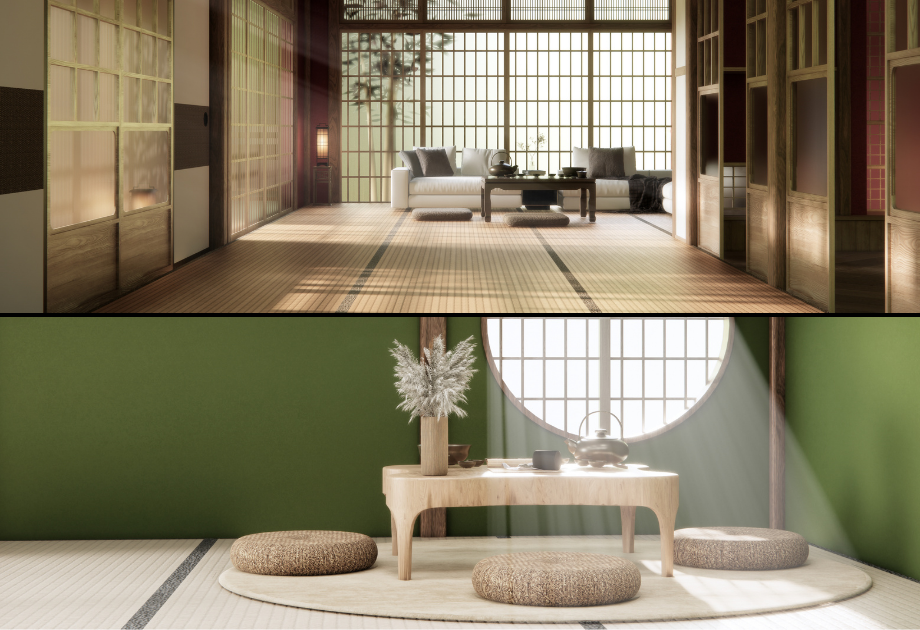
Japanese Wood: The Beauty of Restraint
Japanese wood flooring keeps the natural world present indoors, and it gets there by holding back. The boards are sealed for protection with a clear, matte finish, one that adds neither color nor shine. A heavier hand could stain the grain a darker brown or polish it to a high gloss, but the whole approach is the decision not to. What's left is the wood's own color and the way the grain moves across a single board. The discipline of stopping there, of trusting plain wood to carry the room, is the beauty of it.
The plainness has a purpose. Japanese interior design treats the boundary between indoors and out as something to dissolve, and the floor carries most of that job. Those same boards run from the living room toward a glass door and the garden beyond it, until the eye stops registering where the room ends. The deck, the floor, and the view read as one continuous surface.
The Japanese hardwood species behind the look are traditionally cedar and cypress. Domestic white oak, maple, and ash give the same effect in an American home, which keeps the whole style local. The finish handles the rest. An ultra-flat, clear topcoat holds the bare, unstained look of the board, with no amber tint and no shine.
Scandinavian Pale Wood: Warmth Through Light
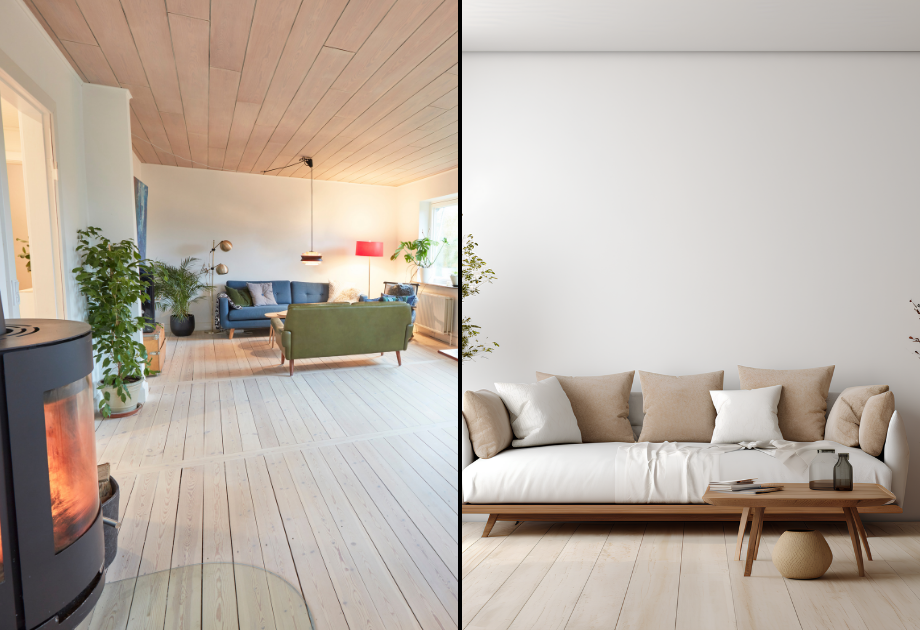
Scandinavian flooring comes from a region with very little winter sun. The days are short and the sun stays low, so a Nordic home has only a few hours of weak daylight each day. Nordic interior design answers this problem by building the room around a pale floor. That floor reflects the available light instead of absorbing it, and the whole look follows from there.
Wide-plank hardwood flooring means fewer seams, and a floor with fewer lines across it makes a small room feel larger and more open. To avoid harsh glare and help the light reflect softly and evenly, the finish of the wood is matte, not glossy. And because pale wood yellows as it ages, many Nordic floors are white-washed or treated with lye to hold that color for years.
Scandinavia has no monopoly on dim winters. Ohio winters are gray and short on sun, too, so a pale, wide-plank floor in white oak, ash, or beech brightens a room here the same as it would up north. The reflected daylight reaches deeper into the space. Even on a dark February afternoon, the room stays brighter than you'd think.
Bring a Global Tradition Home with A Step Above Flooring
These five traditions come from all over the world, but using one in your home doesn't mean you must copy the original. Just take the one that stuck with you and make it your own. That might be parquet in your living room, terracotta in your entryway, or Japanese wood in your bedroom. The tradition is the starting point, and what you build from it is yours.
Getting it right is easier with installers who already know the material. A Step Above Flooring has matched types of flooring to Cincinnati-area homes for more than 30 years. We source each tradition through established tile and hardwood partners, and we install every floor we sell. So a remodel built on one of these traditions starts on familiar ground.
The best way to find the one that's yours is to stand in front of the materials. Visit our showroom and run a hand over the tile, hardwood, and stone. Schedule a consultation with our team, and the one you keep coming back to becomes a floor of your own.