
How Humidity Impacts Your Floors (and How to Get Ahead of It)
How Humidity Impacts Your Floors (and How to Get Ahead of It)
.jpg)
A July afternoon in Cincinnati hangs so heavy and damp that it finds its way inside even with the air conditioner cranked up. By January, months of furnace heat have left the house dry enough to chap your hands. Around here, our homes run between those two extremes every year.
Your floor lives through both. And it'll keep doing that for as long as it's in the house. Wood floors react the most, because they take on and give off moisture as the air around them changes. But wood floors are only the start. You might be surprised to learn how other floor types are affected by the weather patterns of the Cincinnati tri-state area.
This blog covers how hardwood, vinyl, tile, stone, and laminate each handle that yearly range. It also shows how to get ahead of the problem before any of them goes down.
How Wood Moves with the Seasons
Cincinnati isn't a dry place. Outdoor humidity here averages around 70 percent across the year. And it stays high through most of it. The damp air comes indoors with you in the warm months, and a humid summer keeps your rooms moist for weeks at a time. Winter changes the indoor picture. A furnace runs all season and dries the air out. Without something to add moisture back, indoor humidity can fall below 30 percent.
Wood reacts to that air directly. It's hygroscopic, which means it trades moisture with whatever surrounds it. So, your planks swell in a damp summer, then pull back in a dry winter.

Knowing Normal Movement from a Problem
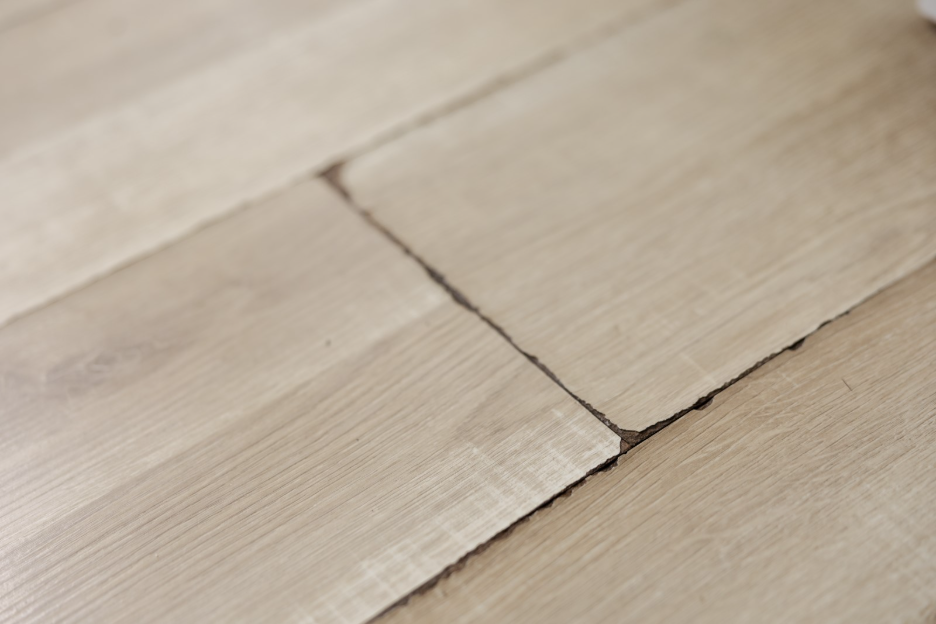
Some of that movement is normal. So, it helps to know which kind you're seeing. In a dry Ohio Valley winter, thin gaps can open between planks, then close again when summer humidity returns. Hairline, even gaps that come and go with the seasons are expected.
A few patterns aren't normal. Gaps that stay open all summer mean a floor that's too dry for too long. Planks that lift at the edges and dish in the middle are cupping, which usually means moisture is reaching the underside of the boards. Boards that pull up off the floor are buckling. Most of the time the water's coming from below, through the subfloor or a damp lower level. A professional should take a look at that before it spreads.
What Each Floor Can Tolerate
Not every floor reacts to humidity the same way. Some move a good deal with the moisture in the air, while others barely move at all. And a floor that holds up in an upstairs bedroom can fail in a basement. So the right choice depends on the room as much as the material.
Solid Hardwood
A solid hardwood plank is one piece of wood, which is why it moves more than any floor here. It swells and shrinks across its full width as the air changes. It belongs above ground, in rooms where conditions stay fairly even. Below-grade spaces like basements are hard on it. Most installers steer it away from them.
Engineered Hardwood
Engineered hardwood is made to expand and contract far less than solid wood, which helps it hold up in a humid home. Unlike a solid plank, it can even go in below-grade rooms. It's still wood, though. So it does best when the indoor air stays in a controlled range.
Luxury Vinyl
Luxury vinyl has a synthetic core. The moisture in the air doesn't move it the way it moves wood. It holds up in damp rooms and below-grade spaces where wood struggles, which makes it one of the best flooring options for a humid climate. It still needs a flat, sound base under it, because waterproof on top doesn't fix an uneven subfloor.
Tile and Stone
Tile and stone don't take on water from the air at all. They won't swell or shrink with the seasons, which makes them a top choice for wet areas like bathrooms, laundry rooms, and any space below grade.
Laminate
Laminate's the one to place with more care. Its top layer resists spills and everyday damp. The core underneath, though, is compressed wood fiber. If that core gets soaked, through a spill left too long or moisture creeping in at the seams, it swells for good. A swollen core can't be dried back flat. So laminate belongs in drier rooms above ground, away from standing water.
Matching a Floor to Your Home's Conditions
Picking the material is half the job. The other half is matching it to the conditions inside your own home. And that starts with the air.
Indoor humidity should stay between 30 and 50 percent. One reading outside that range doesn’t do much harm. The problems come from big, repeated changes between damp and dry conditions. So, keeping the humidity in range in your home means adding moisture in the dry winter months and dehumidifying in the humid summer months.
Before the flooring is installed, it goes through acclimation. The planks sit inside your home until their moisture content matches the air they'll live in. Acclimation can take days or weeks, depending on the home.
The subfloor gets measured too. An installer checks the moisture in both the flooring and the subfloor before fastening a board. The two readings have to land close together. On a narrow strip, they can sit up to 4 percent apart. But on a wider plank, they have to come within 2 percent. The measurement is what turns guesswork into a fit you can count on.
Get Ahead of Moisture with A Step Above Flooring
Your floor lives through every July and every January for as long as it's down. How it weathers them comes down to the material you choose and how well that material fits your home. So the floor that still looks right years on is the one matched to your rooms and your climate before it ever went in.
That kind of planning is hard to manage on your own. But it's exactly what a full-service installer is for. A good one weighs the room, the material, and the moisture as one decision, then handles the install so the floor is right the first time.
We've spent over 30 years matching floors to homes across Southwest Ohio and Northern Kentucky. So you get a floor that holds up year after year, with none of the worry landing on you. Let's talk about your flooring project.