
How to Pick Living Room Flooring You'll Love for Years
How to Pick Living Room Flooring You'll Love for Years
.jpg)
The living room is where life happens. It's where you slide across the hardwood in your socks, belting out your favorite rock song when no one's looking. It's where you plop down on the couch after a long day. It's where the dog claims his spot on the rug like he pays rent.
And underneath all of it? The floor.
Few rooms see as much daily life as a living room, and the floor wears every bit of it. That's why choosing a living room floor is a different decision than choosing flooring for any other room. In this guide, we'll walk through what your living room actually puts a floor through, how the most popular materials hold up, and what to think about before you commit.

What Your Living Room Asks of a Floor
Before you pick a material, it helps to know what you're really asking for. Here are the things which matter most in a living room:
- Durability. Think about what your living room asks of a floor every day. A heavy sectional sits in one spot for years, and the floor underneath has to handle that steady pressure. Coffee tables get pushed around for company or vacuuming, which leaves wear in the same paths over and over. Pet claws and kids put their own wear on the floor too. Some materials shrug it all off. Others can't keep up.
- Comfort. This is the room where you sit on the floor with your kids or on movie night. Where you walk barefoot on a cozy Sunday morning. Or maybe even where you stretch out for yoga poses. A comfortable floor here is a must.
- Sound absorption. Hard surfaces bounce footsteps and voices around an open room, while soft surfaces quiet things down. In fact, the Carpet Institute of Australia found carpet absorbs sound about seven times better than hardwood. So when the whole family is home and talking over each other on Christmas morning, you'll really feel the difference.
- Budget. Some materials cost more up front but pay off over decades, while others are easier on the wallet today and still hold up beautifully. The right choice depends on your home and your timeline.
Keep these in mind as you read on. They're the lens for everything below.
How the Most Popular Materials Hold Up in a Living Room
With those four qualities in mind, let's look at the most popular living room flooring options. Each one has its own strengths, and the best choice for your home comes down to how your household actually lives in the space.
Hardwood
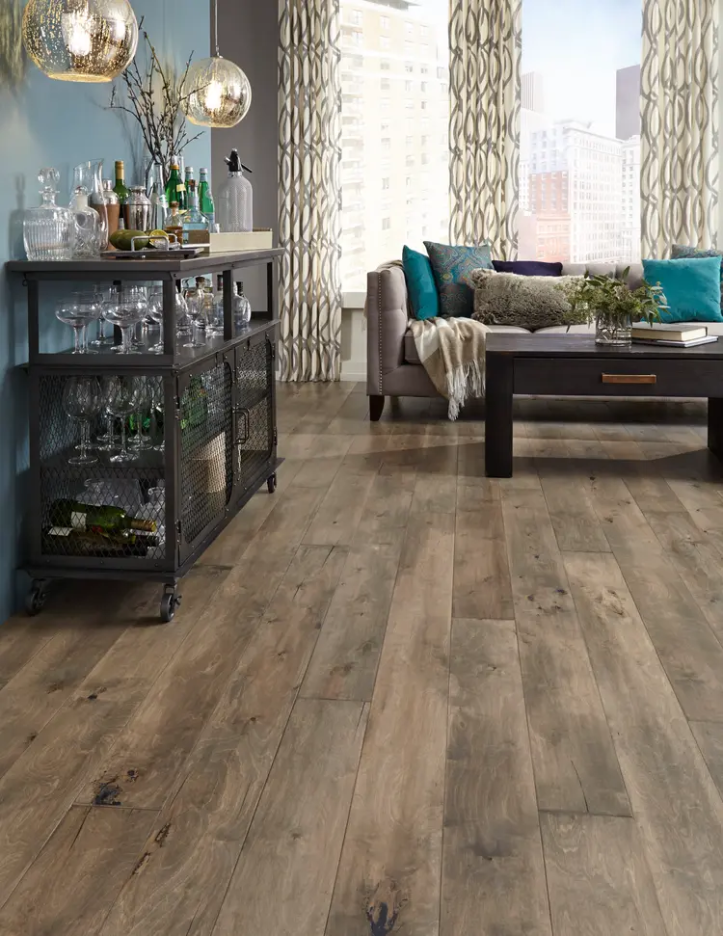
A hardwood floor is a true long-term investment. With proper care, it can last 50 to 100 years, and you can refinish it several times across its lifetime. That's part of what makes it such a classic choice for a living room.
But the finish of the wood is where the living-room conversation needs to happen. Gloss finishes end up broadcasting every scratch and dust mote. Matte and low-sheen finishes hide daily wear far better, and they pair beautifully with the warm wood tones trending for 2026. Engineered hardwood is worth a look too, especially if your living room sees humidity swings or temperature changes. It's more stable than solid wood in those conditions.
Luxury Vinyl Plank
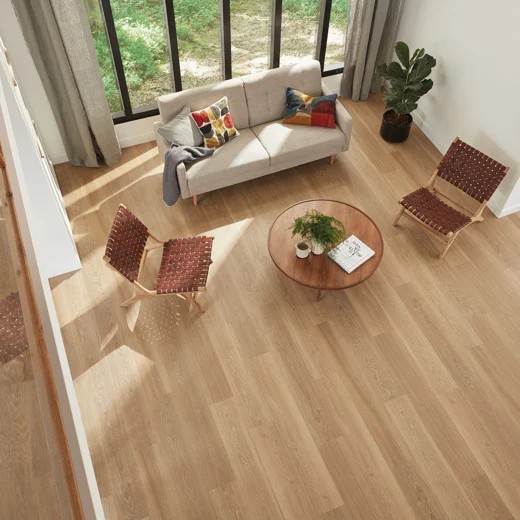
Luxury vinyl plank, or LVP, has spent the last decade earning its place as a serious living room option. It's not a budget compromise anymore. Plus, modern LVP handles heavy furniture and pet claws without the scratch concerns of hardwood. And the looks? They've finally caught up with the performance.
Here are the specs to look for when choosing LVP:
- A wear layer of 20 mils or thicker, which is what stands up to heavy furniture and daily traffic.
- A Wood Plastic Composite (WPC) core with cork or foam backing, which adds warmth and quiet underfoot that older vinyl couldn't deliver.
- Embossed-in-register texture, which lines up the surface grain so closely with the printed pattern that you have to kneel down to tell it isn't wood.
One trade-off worth knowing: LVP doesn't carry the same long-term resale impact as hardwood. But for daily living, it more than earns its keep.
Carpet
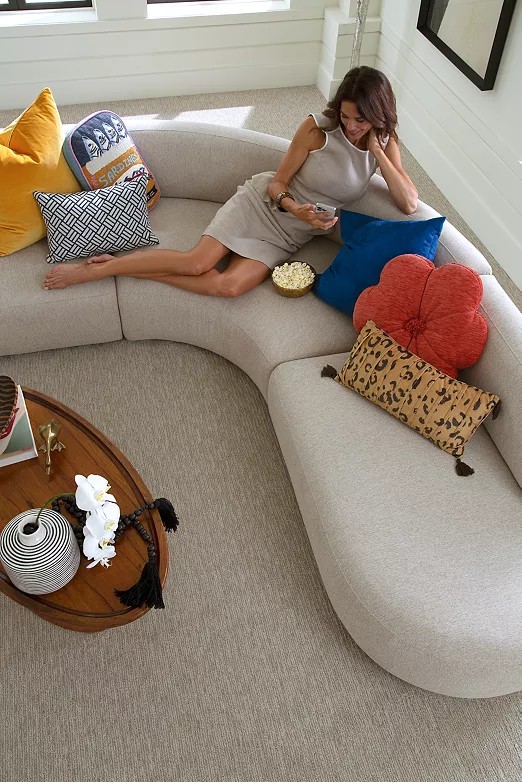
Carpet does three things better than any other material. It absorbs sound, holds heat, and feels softer underfoot. Think about how your family actually uses the floor. The Nerf gun showdowns that race in and out of the room. The dog's preferred nap zone. The kid who builds a fort and stays in it all afternoon. If that sounds like your living room, carpet still belongs in the conversation.
The trade-off is maintenance. Carpet holds onto dander and odors more than hard surfaces, and it typically lasts 5 to 15 years depending on traffic and care. But fiber choice changes the math. Triexta and nylon hold up best under heavy use. Cut piles and Frieze styles handle pets better than loop piles like Berber, where claws can catch and pull.
Tile
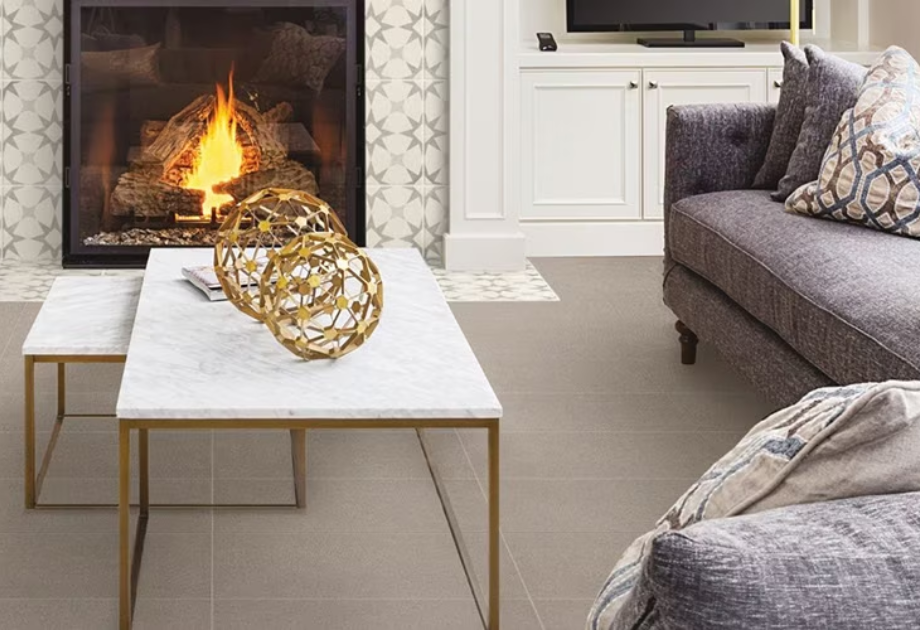
Tile is the option many people don't think to put on their living room shortlist. But it deserves a closer look, especially in open-concept homes. Porcelain in particular is denser and tougher than ceramic. It handles heavy furniture and steady traffic without the scratch concerns of wood.
The trade-off is temperature. Tile feels cooler underfoot than the other three materials. Radiant heating solves that completely. Area rugs solve it partially and give you a soft place to land barefoot.
The design range has come a long way, too. Wood-look porcelain planks and large-format tiles bring warmth to a room. They create visual flow, too. Older tile patterns just couldn't pull that off.
.jpg)
What About Open-Concept Layouts?
Open-concept layouts add one more thing to think about. Your living room flooring isn't on its own anymore. It flows into the kitchen, the dining area, and sometimes the entryway, and how it connects is part of the design.
The first question is whether to use one material throughout or mix between zones. Both can work. A single hardwood, LVP, or tile floor across the whole space creates seamless flow. Mixing materials lets you give each zone what it needs, like durable tile in the kitchen and softer carpet in the living room.
So how do you make either approach work? If you're sticking with one material, plank direction matters. Running them the same way across connected rooms keeps the eye moving and the space feeling larger. Wide planks and large-format tiles can boost that effect even more. And if you're mixing materials, like carpet in the living room and hardwood or tile elsewhere, plan the transition for a natural break point. The edge of an island, a doorway frame, or a change in ceiling height all give the change a reason to happen there.
Find the Right Fit for Your Living Room at A Step Above Flooring
The right living room floor depends on how your household actually lives in the space. Two dogs and a toddler tell a different story than two adults and a weekend reading habit. So the best decision is one made with your home in mind, not just a spec sheet.
The team at A Step Above Flooring can help you get there. Stop by our showroom to see and feel the materials in person. Take a few samples home and live with them for a few days. Or schedule a consultation and we'll come to you. Whichever way you start, we're here to help you find the right floor for the way you live.